Friday, September 03, 2010
Construction
Forums

Mold Occurrence in New Construction

Posted in: Building Codes
By Dr. Richard A. Wolfe
Jan 12, 2005 - 6:22:00 PM
Page: 1 2
Mold Occurrence Influenced By Building Inspection Practice

"Fifty percent [50%] of homes contain problem molds. A new MAYO Clinic medical study attributes nearly 100% of chronic sinus infections to mold. A 300% increase in the asthma rate over the past 20 years has been linked to molds," Source: USA WEEKEND, Dec. 3-5, 1999

Mold occurrence in new homes has become so endemic that builder's liability insurance coverage limits the insurance carrier's liability to a few thousand dollars, if it covers mold issues at all. Homeowner's insurance policies are similarly affected, with insurance carriers limiting their liability to not more than five thousand dollars in most instances. Financially sound insurers, with hundreds of billions of dollars in assets, say they cannot afford to write insurance policies covering mold. Many states are limiting their own liability for failure to properly inspect homes to prevent conditions that contribute to mold propagation. Mold related health issues stand to cause as serious an economic impact on the US economy as have asbestos related issues and lead paint related issues.

When mold becomes an issue, tens of thousands of dollars must often be expended to address the conditions which allow mold growth and tens of thousands more to repair cosmetic and structural damage to the home. Many health care organizations and respiratory experts attribute a number of illnesses to spores and airborne toxins directly attributable to mold colonization in the living environment. While insurers say they are not able to afford the cost, homeowners and builders are probably not prepared for the significant price of mold remediation and control either.

The increasing incidence of mold problems in residential construction has been attributed to many different factors including less air exchange between the treated inside air and unconditioned outside air, poor Heating, Ventilation, Air Conditioning, (HVAC) planning, the changing nature of building materials, poorer site location as prime building sites become more scarce, and a host of other potential causes. It is often claimed that through simply controlling the relative humidity and allowing for sufficient air exchange, mold incidence can be completely controlled. The prevailing wisdom is that when relative humidity is held to below 60%, mold will not even be an issue.

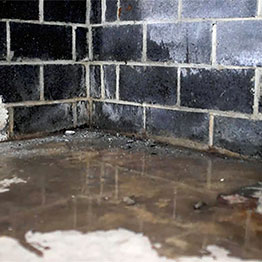
In reality, the most expensive mold problems are those that exist in areas not often visited and in concealed areas that cannot be easily inspected. These are the areas wherein humidity is not ever controlled. These areas, including inside the stud cavity and on the floor joists and decking above the crawl space or basement have humidity levels that are not affected by adjustments to the HVAC, system. By comparison, mold issues inside the living area are more easily addressed and fairly obvious solutions and treatments are available.


Page: 1 2

About this author:
Dr. Richard A. Wolfe recently retired.
He was the Director of the Applied Sciences Department of Lee McRae College, Banner Elk, North Carolina. Dr. Wolfe serves as an advisor to the US Department of Energy, Oak Ridge Technology Center.
bookmark tool image


Google Custom Search


This page is part of the Construction News & Articles section at GreatPossibilities.com.
All material on this website is copyright © of the author or original source unless specifically noted otherwise, and may not be used elsewhere without express permission from the author or original source.

  • SafeSurf Rated All Ages
  • Internet Content Rating Association
  • Valid XHTML 1.0 Strict